
Senate Republicans voted Thursday to reject legislation that would have curbed U.S. President Donald Trump’s ability to launch an attack on Venezuela, while Democrats pressed Congress to play a greater role in Trump’s high-stakes campaign against Venezuelan President Nicolás Maduro.
Lawmakers, including senior Republicans, have demanded that the Trump administration provide them with more information about U.S. military strikes on suspected drug-trafficking ships in the Caribbean Sea and eastern Pacific Ocean.
But Thursday’s vote, which would essentially prevent an attack on Venezuelan soil by first requiring congressional authorization, showed how far Republican senators are willing to go to allow the Trump administration to continue building up its naval forces in the region.
“President Trump has taken decisive action to protect thousands of Americans from deadly drugs,” said Sen. Jim Risch, Republican chairman of the Senate Foreign Relations Committee.
The legislation had virtually no chance of passing, in part because it would have to be signed by Trump himself, but it nonetheless allowed Democrats to pressure their Republican colleagues over Trump’s threats against Venezuela. The legislation did not progress 49-51.
“We should not go to war without a vote from Congress. The lives of our troops are at stake,” Sen. Tim Kaine, a Virginia Democrat who supported the bill, said in a speech.
US naval forces are building an unusually large force, including its most advanced aircraft carrier, in the Caribbean Sea, leading many to the conclusion that Trump’s intentions go beyond simply intercepting boats carrying cocaine.
“It’s really an open secret that this is much more about possible regime change,” said Sen. Adam Schiff, a California Democrat who supported the resolution. “If this is where the administration is headed, if this is what we are risking – involvement in war – then Congress needs to be heard on this.”
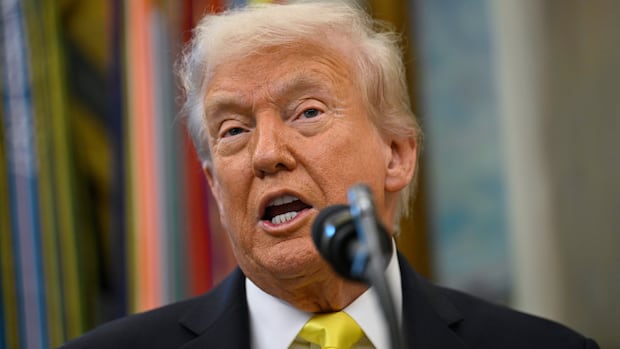
US President Donald Trump has confirmed that he has authorized the CIA to carry out covert operations in Venezuela, stepping up efforts to pressure the government of President Nicolas Maduro. Trump said he authorized the action because large quantities of drugs were entering the United States from Venezuela, largely by sea. Venezuela’s Foreign Ministry condemned the move in a statement, saying the action “constitutes a very serious violation of international law and the Charter of the United Nations.”
Pushing for Congressional Oversight
As the Trump administration has reconfigured U.S. priorities abroad, a sense of frustration is growing among lawmakers, including some Republicans, concerned about recent moves by the Pentagon.
At a hearing before the Senate Armed Services Committee earlier Thursday, Sen. Roger Wicker, the Republican chairman, said many senators had “serious concerns about the Pentagon politburo” and that Congress had not been consulted on recent actions such as pausing security aid to Ukraine, reducing the number of U.S. troops in Romania and formulating the national defense strategy.
Republican senators directed their anger at the Defense Department’s politburo.
“It seems like there’s a pigsty-like mess coming out of the policy shop,” Sen. Tom Cotton, an Arkansas Republican who chairs the Senate Intelligence Committee, said at another Armed Services hearing earlier this week.
As reactions mount on Capitol Hill, the Trump administration has stepped up its campaign briefings in the Caribbean, including sending Secretary of State Marco Rubio and Defense Secretary Pete Hegseth to a confidential briefing on Wednesday.
The officials gave details of the intelligence used to target the boats and allowed senators to consider the legal justification for the attacks, but did not discuss whether they would launch an attack directly on Venezuela, according to lawmakers at the meeting.
Yet Democrats, joined by Republican Sen. Rand Paul, stirred up unease among Republicans by forcing a vote on the possibility of an attack on Venezuela under the War Powers Resolution of 1973, which sought to reassert Congress’ power over declaring war.
A previous war powers vote on strikes on ships in international waters failed 48-51 last month, but Kaine said he hoped to eliminate more Republicans with a resolution that only addresses attacks on Venezuela.
Some Republicans worried about strikes
Republican leaders mobilized Thursday to ensure the legislation failed, and many Republican senators expressed support for Trump’s campaign, which has killed at least 66 people in 16 known strikes.
Sen. Lindsey Graham, a South Carolina Republican and Trump ally, argued in a speech that the War Powers Act gave lawmakers too much power over military decisions and that Congress had other ways to control the president’s decisions.
“I like the idea of our commander in chief saying to the narcoterrorist organizations that you are not only a foreign terrorist organization, but when you engage in threats against our country – a ship heading to America full of drugs – we are going to take you out,” Graham said.
Just hours before the vote, Republican Sen. Susan Collins of Maine said she had carefully read the Trump administration’s secret legal opinion on the strikes but had not made a decision.
Sen. Thom Tillis, a Republican from North Carolina, said he would vote against the resolution but added that he had doubts about the campaign.
He noted that it is costly to change where an aircraft carrier is deployed and questioned whether those funds could be better used on the U.S.-Mexico border to stop fentanyl trafficking.
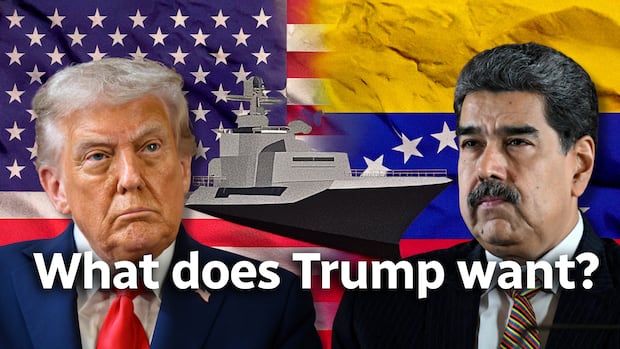
What is President Donald Trump’s endgame with repeated US strikes on ships near Venezuela? Andrew Chang analyzes the threats the Trump administration says it is responding to and explains why Venezuela’s relationship with China could also be a factor. Images provided by Getty Images, The Canadian Press and Reuters.
Tillis said that if the campaign continues for several more months, “then we’re going to have to have a real discussion about whether or not we’re engaging in some sort of hybrid warfare.”
Still, Democrats argued that the Trump administration was using a flimsy legal defense for a sweeping military campaign that endangered U.S. troops and the nation’s reputation.
Senator Jack Reed, the Senate’s top Democrat, accused Trump of engaging in “violence without a strategic objective” while failing to take action that would actually combat fentanyl smuggling. “We can’t bomb our way out of a drug crisis,” he said.
But Kaine also acknowledged that there was also a risk in forcing the vote, because it could give Trump the tacit green light to launch an outright attack.
“Congress simply needs to stand up and be counted – or not,” he said.


