
With a sprawling sci-fi series like “Stargate SG-1,” there’s already so much lore and universe-specific rules to keep in mind that it’s pretty impressive that the writers have managed to maintain the consistency they’ve achieved over the course of 10 seasons. But in addition to making sure that Anubis, the System Lord, and his story made sense and that the Zat weapons worked according to the series bible, the writers also made sure that they were telling stories with heart. They actually had a rule about it.
Although co-creator Brad Wright has two regrets about making “Stargate SG-1,” it seems like filling the series with heartfelt moments isn’t one of them. In an article written for The Companion, Wright explained his rules for science fiction shows, noting how these guidelines “give our heroes the limits of what’s possible, limiting their options”, which ultimately makes their victories “all the sweeter”. He also stated his view that when science fiction films or shows break the rules for no good reason, “it is alienation at best and betrayal at worst.” But beyond that, Wright had one particular rule that towered above all others. “A story must have heart“, he wrote. “If it doesn’t make the audience laugh or cry, love its characters, surprise or amaze them, then all the rules in the world won’t matter.
As story-dense as a series like “SG-1” was, it seems that the writers never forgot that they were storytellers above all, and that they were not content to codify the rules of an imaginary science fiction universe. The 10 seasons of “SG-1” bear witness to this approach.
Stargate SG-1 had heart throughout its 10 years of existence
“Stargate SG-1” was never the greatest TV show — even though it did set a Guinness World Record for longest running sci-fi TV show (which was eventually usurped by “Smallville”). But throughout its 10 seasons between 1997 and 2007, it developed and maintained a loyal following. You don’t do that by simply presenting a series of lore-heavy, heartless sci-fi adventures, and “SG-1” was a masterclass in how to successfully maintain a fantasy show about giant space portals.
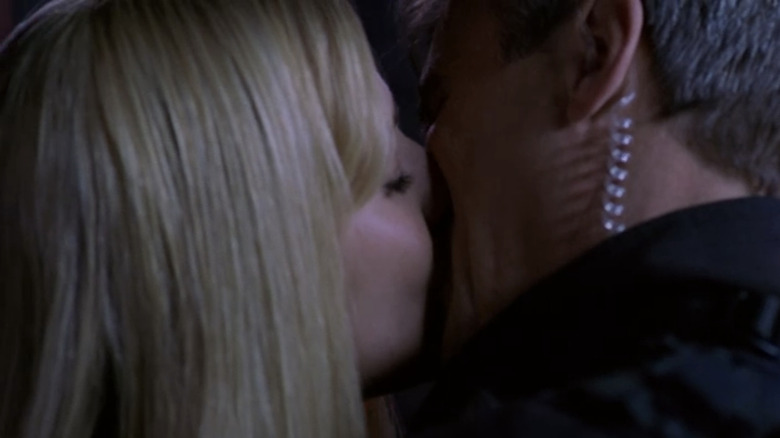
The season 4 episode “Window of Opportunity,” for example, managed to tell a fun time machine story in which Richard Dean Anderson’s Colonel Jack O’Neill finds himself trapped in a time loop alongside Teal’c (Christopher Judge) and an archaeologist called Malakai (Robin Mossley). While the premise is fun and fantastical, the way things are resolved is actually quite moving. Similarly, the season 7 episodes “Heroes” (parts 1 and 2) saw Dr. Janet Fraiser (Teryl Rothery) shot down by the Goa’uld before journalist Emmett Bregman (Saul Rubinek) produced a documentary that served as a testament to Fraiser’s sacrifice, convincing the SG-1 team to finally sit down for an interview with him. Even the hastily rewritten “SG-1” episode “Point of View” was notable for tugging at the heartstrings with its depiction of an alternate version of Samantha Carter (Amanda Tapping) and Jack O’Neil finally kissing for the first time before the alt-Carter must return to her own universe.
As such, Brad Wright has clearly succeeded in instilling in his writers his principle that stories have heart, and the fact that he and the team have managed to maintain this commitment throughout 10 seasons is something of an evolution in its own way.


