
Gordon CoreraSecurity Analyst
A week after the dramatic raid that captured Venezuelan Nicolas Maduro, intelligence details surrounding the operation are becoming clearer, but some mysteries remain.
Intelligence
The mission required months of planning and intelligence gathering. In August, the CIA reportedly sent a team of undercover agents to Venezuela.
Because the United States does not have a functioning embassy in the country, the team was unable to use diplomatic cover and worked in what is known in the intelligence world as a “no-go zone.” They were on the ground scouting out targets and recruiting people who could help them.
U.S. officials said they had a special source who could provide detailed intelligence on Maduro’s whereabouts, which would have been critical to the operation.
The identity of these sources is normally highly protected, but it quickly became apparent that this was a “government” source who must have been particularly close to Maduro and his entourage to know where and when he would be.
This led to intense speculation about who they were and what happened to them. But their identity is still not public.
All human intelligence on the ground was integrated into an intelligence “mosaic” to plan the operation in conjunction with technical intelligence such as mapping and satellite imagery.
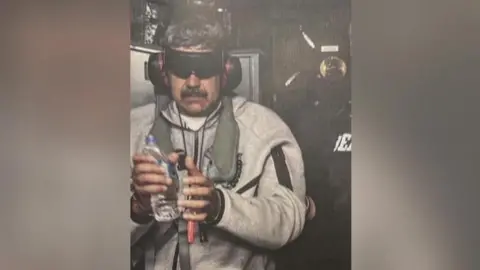 @realDonaldTrump
The mission
The scale, speed and success of the operation were unprecedented.
“This thing worked like clockwork. That doesn’t happen often,” says David Fitzgerald, former CIA operations chief for Latin America who also worked on mission planning with the U.S. military.
“It is not military tactics that guide the operation, but intelligence.”
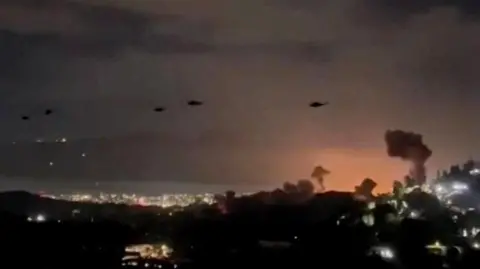
About 150 planes were involved in the mission, with helicopters flying just a hundred feet above the terrain to fly to Maduro’s compound.

 Reuters
However, some mysteries remain. The first is how the United States turned off the lights in Caracas to allow special forces to arrive.
“The lights in Caracas were largely turned off because of some expertise that we have: It was dark and it was deadly,” US President Donald Trump said.
The fact that US Cyber Command was publicly thanked for its role in the operation has given rise to speculation that US military hackers may have penetrated Venezuelan networks in advance to shut down the network at the right time – but details are limited.
The failure of Chinese and Russian air defenses also led to speculation about what type of jamming or electronic warfare technology the United States deployed in the air to facilitate the operation. U.S. Space Command, which operates satellites, has also been credited with creating a “lane” for special forces to enter without being seen.
Stealth drones have also reportedly been deployed. The exact details of the capabilities used will likely remain secret, but America’s adversaries will do their best to try to understand what happened.
The battle
Those who have planned complex operations find it remarkable that everything went according to plan, which does not usually happen. One helicopter was hit but was still able to fly and no U.S. forces personnel were killed.
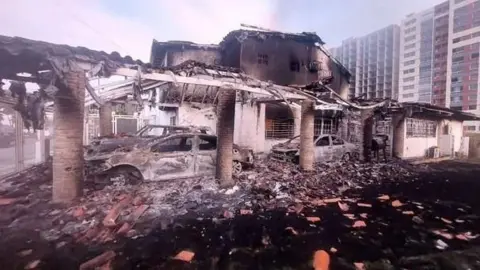
There are still few details about the battle that took place at Maduro’s residence, Fuerte Tiuna.
The Cuban government said 32 of its nationals were killed by U.S. forces. These were bodyguards provided by its ally Cuba to defend Maduro. The Caribbean country not only provides bodyguards, but also broader security support to the regime.
“In Maduro’s immediate perimeter there were probably no Venezuelan security agents and, in the outer perimeter, perhaps a mixture of both,” Fitzgerald says.
The fact that they proved so ineffective also led to questions about whether certain elements of the regime had somehow facilitated the mission.
US forces were also able to reach Maduro as he attempted to lock himself in a steel safe, but before he could close the door.
They had blowtorches and explosives ready to blow up the door if necessary, but the speed of the arrest once again suggests an incredibly detailed understanding of the layout of the compound.
 CBS
CBSThe plan
The CIA undertook a classified assessment before the operation, examining what might happen if Maduro was removed.
Analysts considered a range of options and, according to reports, came to the view that working with elements of the existing regime offered a better chance of stability than trying to install the opposition in exile in power. This helped solidify the idea that the United States should work with Delcy Rodríguez, the vice president.
There are indications that there were secret and roundabout contacts with elements of the Maduro regime before the operation to discuss how people could position themselves given the different potential outcomes.
The exact details remain a mystery, but they likely go a long way to explaining why the mission happened, why it was successful, and what the next plan is.


