
For all the accusations of cinematic banality leveled against the Marvel Cinematic Universe, the series has its share of stylistic calling cards. A witty quip, a family tone, a crowd-pleasing hero arrival just as things are falling apart – it’s all part of the recipe that has made Kevin Feige’s saga the most successful blockbuster franchise of all time. But there’s one particular trope that Feige intentionally avoided: the damsel in distress.
Speaking to Rotten Tomatoes in 2018, the Marvel Studios head explained how he entered the MCU with a well-defined plan to avoid featuring women in peril in need of rescuing. In fact, he began his career with this aversion already well ingrained. “From the beginning of my career, the notion of the damsel in distress was outdated,” he says. “And when we started making our own films, we didn’t want to fall into that trope – we wanted to avoid it as much as possible.”
You may be scratching your head for times when MCU films have seemingly transgressed this fundamental rule. But you’d be hard-pressed to point out such a moment, because most of the women in Feige’s franchise are complete badasses. At least, that’s the general trend for this particular franchise, which has increasingly focused on female heroes as it has evolved. Now, I’m not saying that the MCU represents a model of female empowerment. But Marvel’s female characters usually have more to do than motivate the male characters.
The MCU has introduced more female heroes over time
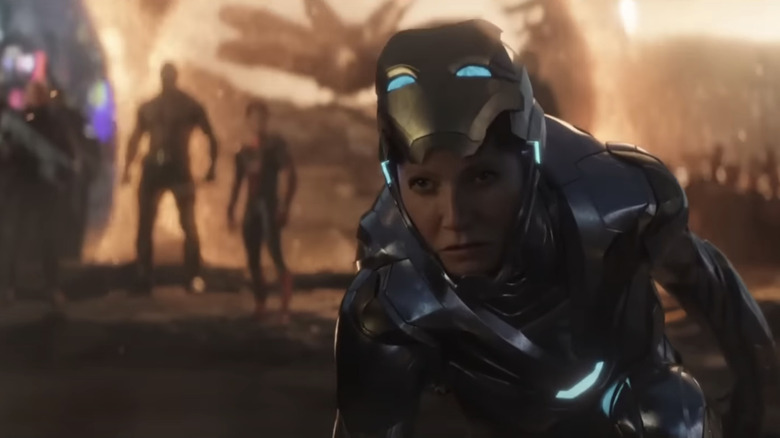
In 2008, “Iron Man” became the unlikely superhero movie that changed Hollywood forever. Although it told the story of Robert Downey Jr.’s Tony Stark, it starred Gwyneth Paltrow as his assistant and eventual girlfriend, Pepper Potts, who, rather than being some sort of object for Stark to observe, represented a strong presence that kept Downey’s playboy in line. As the films progressed, Potts would suit up and even save Stark himself on several occasions, representing the series’ general trend of introducing more female heroes as it evolved.
During his 2018 interview with Rotten Tomatoes, Kevin Feige highlighted Hayley Atwell’s Agent Margaret “Peggy” Carter, who began as a love interest for Steve Rogers (Chris Evans) in “Captain America: The First Avenger” (2011), but quickly became a protagonist in her own right, appearing in “Agents of SHIELD” before leading her own ABC series for two seasons between 2015 and 2016. “With Agent Carter, she’s incredibly capable at a time when it was very difficult to rise through the ranks in the military,” Feige said, referring to the show’s 1940s setting. “We really wanted to create these female characters as strong and capable as the heroes. Now, as we grow, that becomes even more evident, to the point where they are heroes.”
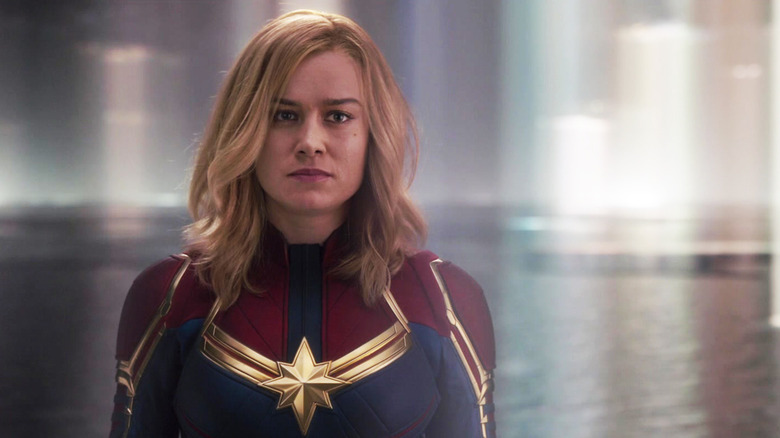
In 2019, “Captain Marvel” debuted and was a commercial and critical success, earning $1.1 billion and maintaining a 79% Rotten Tomatoes score to date. As Marvel’s first female-led superhero film, “Captain Marvel” made a strong first landing, suggesting that things were only going to get better for the women of the MCU. Feige certainly thought so, pointing to the then-upcoming film as proof of his franchise’s tireless efforts to celebrate female heroes. “Right now, Brie Larson is on the set of ‘Captain Marvel’ in the first weeks of filming,” he said. Unfortunately, Feige may have waited a little too long to make this shift toward female heroes, as it coincides with a marked decline in the quality of the franchise as a whole.
The MCU took too long to highlight female heroes
In his RT interview, Kevin Feige also highlighted Ryan Coogler’s “Black Panther” and its female characters, Okoye (Danai Gurira), Nakia (Lupita Nyong’o) and Shuri (Letitia Wright). “They’re already iconic characters,” the Marvel boss said, “and people are already wondering, ‘When will they get their movies? When will we get the Shuri movie?’ The answer is: no one wants to see this more than me. And that’s a testament to this film and these actresses. And to the world to be ready, and we would have had to wait a long time, to see these kinds of characters on the screen.”
In the years since Feige’s interview, we have indeed seen Shuri take on the role of Black Panther in 2022’s “Black Panther: Wakanda Forever,” which was one of the most successful female-led projects to come out of the MCU in recent times. Otherwise, much of this plan to highlight female characters came as the MCU entered a difficult and tumultuous phase in which many fans tuned out amid a deluge of mediocre streaming series and bland, generic blockbusters.
Besides the cosmic disappointment that was 2023’s “The Marvels,” there’s “She-Hulk,” a messy meta-legal sitcom that largely missed the mark, and the big disappointment that was “Black Widow.” But there were also big wins in the form of “WandaVision” and 2025’s “Thunderbolts,” which was the best MCU movie in a long time and starred Florence Pugh’s Yelena Belova in the lead role. Unfortunately, “Thunderbolts” was a disappointment at the box office, but that certainly wasn’t due to the movie starring a heroine. All of this is to say that by the time women actually appeared in the MCU, the franchise was suffering from broader issues that somewhat stunted its rise. Hopefully, the upcoming “Avengers” films can set things right and give women a proper launching pad, unencumbered by the problems that have plagued the MCU of late.


