
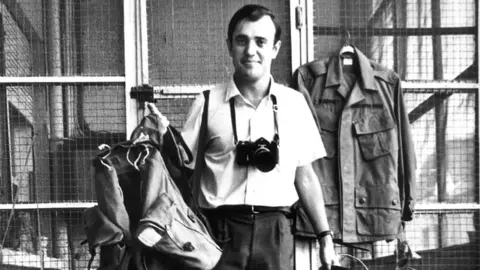
 Photo/AP file
Peter Arnett, a Pulitzer Prize-winning journalist and war correspondent, has died at the age of 91, US media reported.
Arnett won the International Reporting Award in 1996 for his coverage of the Vietnam War for the Associated Press (AP). But he was also well known for his work at CNN, having become a household name covering the first Gulf War.
His career spanned decades and covered several conflicts in countries including Iraq, Vietnam and El Salvador.
The New Zealand-born journalist died Wednesday surrounded by family and friends in California, his son told reporters. He was receiving palliative care for prostate cancer.

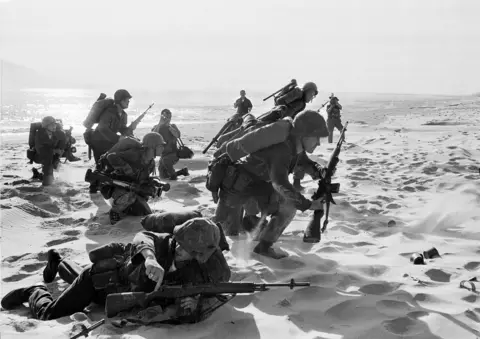 AP Photo/Peter Arnett/File
Arnett first worked for AP as a wire service correspondent in Vietnam, from 1962 until the war’s end in 1975, often accompanying troops on missions.
At a conference in 2013, he recalled the moment he saw a soldier being shot in Vietnam as he stopped to read a map.
“As the colonel watched, I heard four loud gunshots as the bullets tore through the map and entered his chest, inches from my face,” Arnett told the American Library Association.
“He collapsed at my feet.”
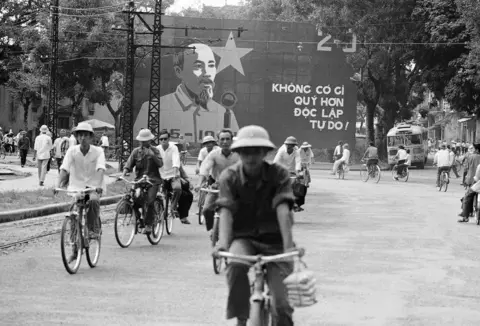 AP Photo/Peter Arnett/File
The journalist left AP in 1981 to join the American channel CNN, where he later became known for his work on the first Gulf War.
He was one of the few Western journalists to remain in Baghdad, according to AP, with one of his first broadcasts from the city interrupted by the sound of missiles and air-warning sirens.
“There was an explosion right next to my house, you may have heard it,” he once exclaimed live on air.
In Iraq, he interviewed then-President Saddam Hussein. Writing about the experience in the Roanoke Times, Arnett said he decided to be “as harsh in my interrogations as the situation allowed.”
He continued: “I was not intimidated by the prospect of meeting the man many called ‘the butcher of Baghdad.’ I thought he couldn’t do any worse to me than the constant bombing of Baghdad threatened to do.
 AP Photo/Peter Arnett/File
In 1997, Arnett became the first Western journalist to interview Osama bin Laden in a secret hideout in Afghanistan, a few years before the September 11, 2001 attacks on the United States.
According to several American media outlets, when asked about his plans, Bin Laden told Arnett: “You will see them and you will hear about them in the media, God willing.”
Arnett later worked for NBC and was fired by the network after giving an interview to Iraqi state television, in which he was seen as critical of US military strategy.
He was hired by the Daily Mirror a few hours later and said he was “in shock” at his dismissal.
“I am reporting the truth about what is happening here in Baghdad and I will not apologize for it,” he wrote in the British newspaper.
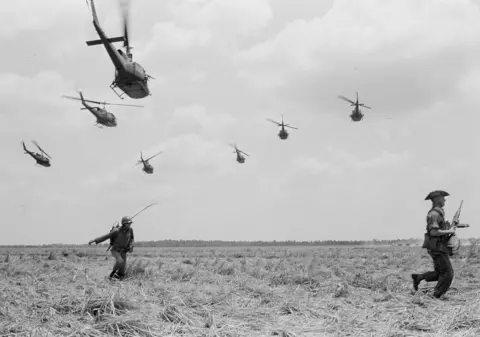 AP Photo/Peter Arnett/File
Born in 1934 in Riverton, New Zealand, Arnett later became a naturalized American citizen and has lived in Southern California since 2014.
Edith Lederer, a former colleague who still works at AP, told the agency: “Peter Arnett was one of the greatest war correspondents of his generation – fearless, intrepid and a magnificent writer and storyteller.
“His reporting in print and on film will remain a legacy for aspiring journalists and historians for generations to come.”
Meanwhile, Nick Ut, a retired photographer who worked with Arnett in Vietnam, said he was “like a brother.”
“His death will leave a big void in my life,” he told AP.
Arnett is survived by his wife Nina Nguyen and their children, Andrew and Elsa.


